
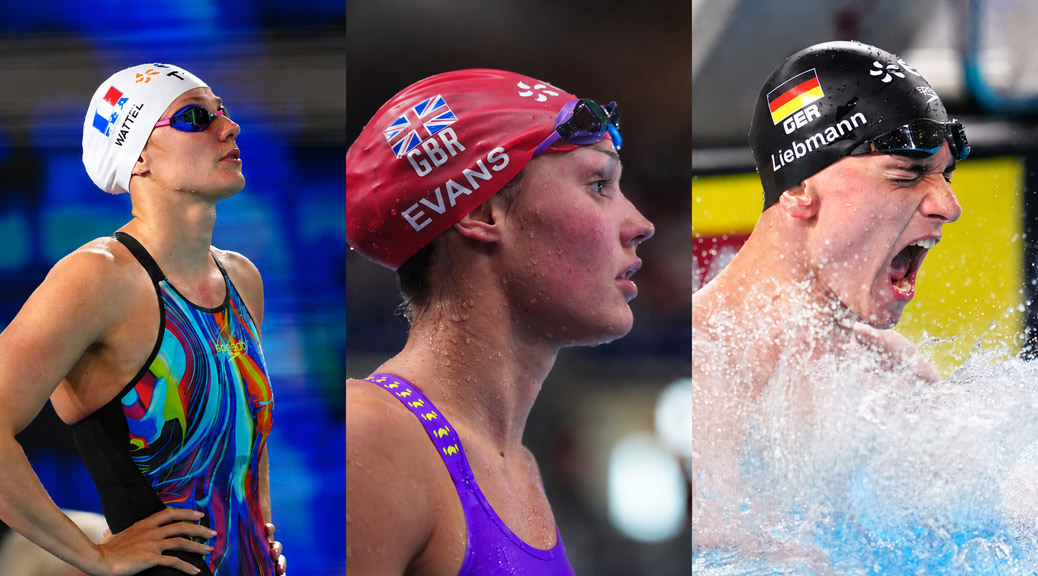
Great Britain, France and Germany are set to launch a new annual international swimming competition in 2027, with the inaugural Three Nations Cup aiming to combine traditional national rivalry with a more spectator-friendly race format. The series, a joint initiative between the three national federations, will begin at Manchester Aquatics Centre on 14 March before moving to the Paris Olympic Aquatics Centre a week later.
Teams will accumulate points across both meetings, with the overall champion crowned following the second leg in France. The winning nation will also take home a prize-money pot to be shared among its team.
Britain, France and Germany are among Europe’s strongest swimming nations and regularly produce athletes capable of competing for global medals. Bringing the three teams together should mean a high standard of racing, while allowing the federations to test a new competition model and keeping the meet to a manageable scale.
Each meet will feature 22 races compressed into a 90-minute programme. Central to the format are a series of 50m ‘skins’ events in butterfly, backstroke and breaststroke, with six swimmers, two per nation, initially taking to the blocks before the field is reduced to four and then two for the final showdown.
Mixed relays will also play a significant role, with four relay events spread throughout the programme. In one of the more unusual features, spectators will determine the swimming order for the mixed 4x200m freestyle relay, adding an audience participation element to the team contest.
The launch comes amid renewed experimentation with alternative competition formats in swimming. The sport has periodically explored team-based concepts, including Duel in the Pool head-to-heads between Great Britain and Germany in Swansea in 2010 and Essen in 2011. More recently, the revival of the International Swimming League for their All-Star meet as a precursor to the potential of a full relaunch in 2027, has highlighted continuing interest in formats that differ from conventional championship meets. Shorter programmes, with this meet slated for 90 minute sessions, team scoring and high-pressure elimination racing offer a different experience for both athletes and spectators.
Aquatics GB chief executive Drew Barrand said the series was designed to create a more engaging spectator experience, with elimination racing, mixed relays and points carrying across two weekends to create a continuous team contest. “It is time for elite swimming competition to evolve” he said. “Together with our counterparts in France and Germany, we have created a series that puts the excitement of racing at its heart.”
Whether the Three Nations Cup becomes a permanent fixture remains to be seen, but its launch reflects a growing willingness among swimming’s governing bodies to experiment with how the sport is presented. The inaugural edition will offer an early test of whether audiences are looking for something different alongside the established championship calendar and whether UK broadcasters are willing to engage with the sport in a way they haven’t been doing recently.
For British swimmers, the Three Nations Cup will open a 2027 season that also includes the Aquatics GB Swimming Championships in London in April and the World Championships in Budapest in July. Athlete selections, broadcast arrangements and ticketing details are expected to be confirmed closer to the event.
Banner Image Istvan Derencsenyi/European Aquatics